Top 10 Dungeon Master Screen
Last update: 12-07-2026
Best Games overall →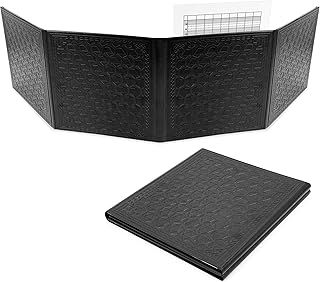
Dungeon Master Screen: 3 things to consider before buying
Match the material to how often it travels
Cardboard is cheap and comes with printed reference tables, but it reacts badly to spills and wears out. Faux leather or wood holds up far better if the screen moves between games.
Check the height before you buy a tall one
A tall portrait screen can wall you off from your players and cut the eye contact that makes a session work. Aim for one your players can see your eyes over when seated.
Do not buy a 2014 screen for 2024 rules
The 2024 ruleset rewrote the Exhaustion and Surprise tables, so an older screen can quietly steer you to the wrong call. Match the screen to the ruleset you actually play.
Frequently Asked Questions
Do you actually need a DM screen to run D&D?
Should I buy a screen or just make my own?
Horizontal or vertical, which is better?
How tall should it be, will it block my view?
Does a first-time DM need one?
Official Wizards screen or a third-party one?
What is different about the new 2024 screen, do I need it?
Are cardboard screens too flimsy to stand up?
Are wooden or magnetic screens worth it over cheap cardboard?
Can I put my own notes and maps in a screen?
Your complete guide to Dungeon Master Screen
Cardboard, faux leather or something sturdier
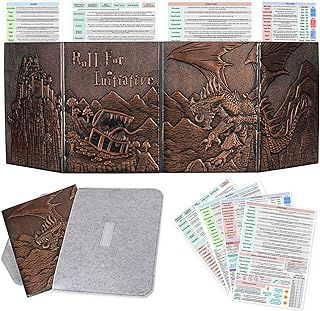
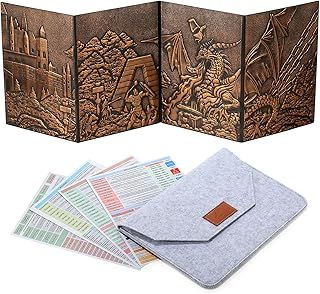
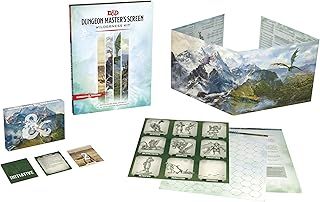
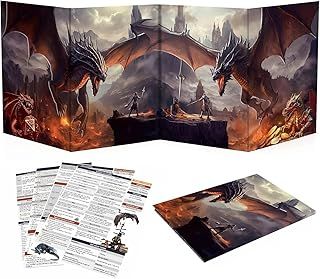
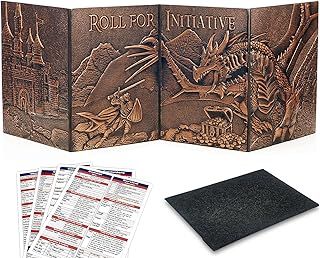
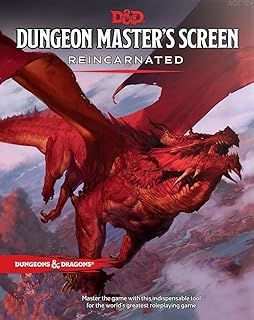
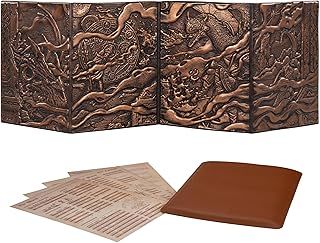
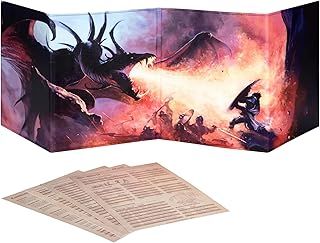
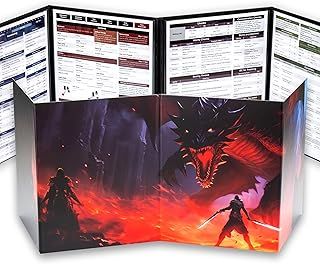
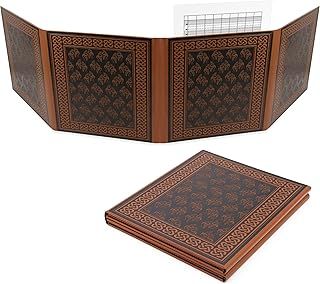
Material decides how the screen feels in your hands, how long it survives a weekly campaign, and what you pay. Cardboard is the default entry point. It's cheap, folds flat, and usually comes with quick-reference tables printed on the DM side. The official Dungeons & Dragons Dungeon Master's Screen Reincarnated is the obvious example, currently 16.45 GBP down from 42.99 GBP. The catch is that cardboard reacts badly to spills and damp, and the structure gives out over time. Look after it and it lasts; leave a pint next to it and you'll find out the hard way. Faux leather sits a step above that. It holds its shape better than card, has an embossed texture, and still folds down for travel, though it won't outlast the real thing. The CZYY Faux Leather Embossed Dragon & Mimic screen is a four-panel option at 39.99 GBP, rated 4.8 across 1271 reviews. Wood is the atmosphere pick, with etched artwork and sometimes magnetic trackers, but it's the option you'll curse if you're forever carrying it to someone else's flat. Acrylic stays rigid instead of going soft, though clear panels reflect roughly 8% of incoming light and can read like a mirror under a bright bulb, so look for an anti-glare or anti-reflective finish.
Landscape or portrait, and will it wall you off
Orientation isn't cosmetic. It changes how you run the table. Portrait screens stand taller, around 11 inches per panel, take up less width, and suit a small table while giving you more to hide behind. Landscape screens are shorter, around 8 inches, and spread wider, so you can lay out notes, maps or minis behind them. The trade is they push you further from your players and eat table width. The official Reincarnated screen is four panels at roughly 11 inches each, about 40 inches wide once it's unfolded. Height is the thing people regret buying wrong. A tall screen builds a wall between you and the table and cuts off body language, which is half of what makes a session tick. Some DMs end up standing to see over a standard screen even with the chair raised, which rather defeats the point. Simple rule: when your players are sitting normally, they should still catch your eyes over the top, and you should keep eye contact with the lot of them. If you sit low or run a cramped table, measure your table and chair height before you commit to an 11 inch portrait screen. When sightlines matter more than concealment, an 8 inch landscape screen stays out of the way.
Pre-printed rules or your own inserts
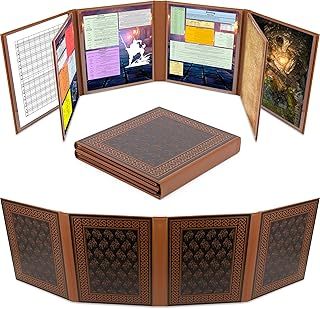
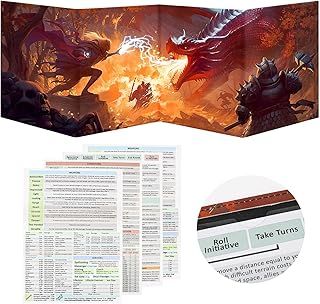
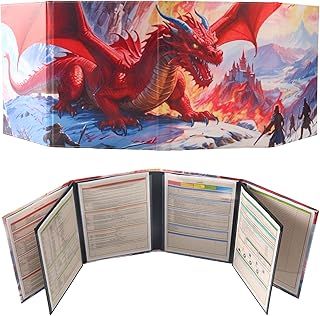
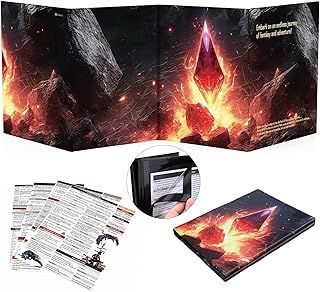
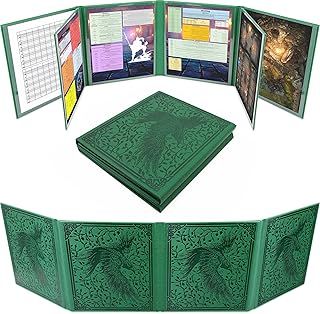
Pre-printed screens ship with fixed tables for conditions, DCs and actions. They work straight out of the packaging and store easily, which suits new and casual DMs. The downside is the content is locked, and it dates the moment the rules shift. Customisable screens use clear insert sleeves, dry-erase panels or magnetic parts, so you set your own layout per campaign. That's the better fit if you run multiple systems, lean on homebrew, or tinker with mechanics a lot. Among the picks here, Hexers gives you four customisable panels with inserts included at 34.15 GBP. The Stratagem Master's Tome offers four customisable panels with free inserts and a dry-erase surface, in black at 37.88 GBP or green at 38.38 GBP. If you're sliding your own sheets in, print a test page first and check it actually fits the pockets before you run off a stack. Quick call: if you only run standard 5e, pre-printed saves the fuss. If you mix systems or build your own rules, go swappable.
Official versus third-party, and the 2024 rules catch
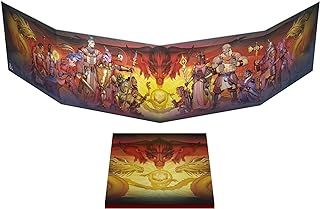
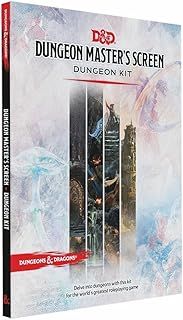
The official Wizards screens print the current official reference tables and use official artists, so you get authority and a low price. What you give up is layout: it's fixed. Third-party makers trade that authority for flexibility. Hexers is neutral fantasy that works across any fantasy RPG, Stratagem organises your own material, and CZYY leans hard into wood-look immersion. There's a genuine timing trap here. The 2024 ruleset rewrote several of the tables screens commonly print, so an old screen can quietly steer you to the wrong call. Exhaustion moved to a flat minus 2 on d20 checks and minus 5 feet of speed per level, and Surprise changed to disadvantage on initiative rather than losing your first turn. The official 2024 screen, out on 12 November 2024, added updated tables for Exhaustion, Surprise, Death Saving Throws and Improvising Damage. So if you're running 2024 rules, don't buy a 2014 screen, because exhaustion and surprise will be printed wrong. And even on the 2024 screen, keep a separate Weapon Mastery reference handy, since it got left off.