Top 10 Electric Bin
Last update: 12-07-2026
Best Electric Bins overall →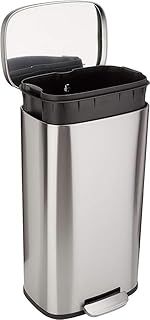
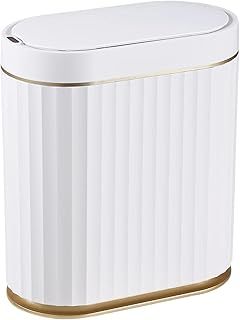
Electric Bin: 3 things to consider before buying
Match the litres to your household before anything else
As a rough guide, a 30 to 40L bin does one or two people, 40 to 50L handles a family of two to four, and 50L or more suits busy homes that want fewer trips to the outside bin. Most bins on this list sit between 42 and 58L, so it leans towards families rather than singles.
Decide how you will power it
Sensor bins run either on batteries, commonly 4x AA or C and often not included, or on a mains adapter. Batteries let you put the bin anywhere but need replacing every few months. Mains removes that running cost, though it ties the bin to a socket.
Check you can override the sensor and fit standard liners
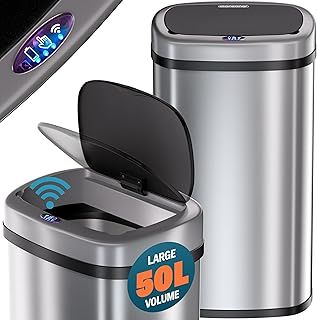
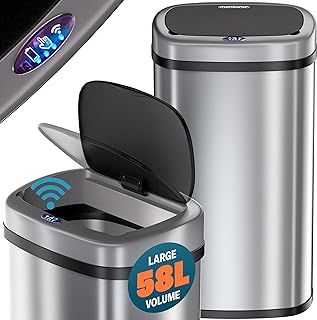
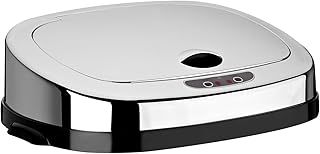
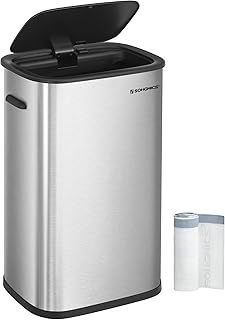
A manual open button matters for when the batteries die or the infrared plays up. The Tower here keeps a touch override, and the Dihl can be opened manually too. Confirm the liner size and whether a bag-retainer ring is included: the SONGMICS ships with a ring plus 15 bags.
Frequently Asked Questions
How do electric sensor bins work?
Do sensor bins need batteries, and do they come included?
How long do the batteries last?
Can I use a sensor bin without batteries or if the sensor fails?
Why does my sensor bin keep opening on its own?
What size sensor bin should I get?
How do I stop fingerprints on a stainless steel bin?
Do sensor bins take standard bin liners?
Your complete guide to Electric Bin
Start with capacity, not looks
The single biggest regret with sensor bins is buying one that is too small and then emptying it every day. As a rough UK guide, 30 to 40L works for one or two people, 40 to 50L is the sweet spot for a family of two to four, and 50L and up suits larger or busy households who would rather not keep taking the rubbish out. Treat those numbers as a starting point rather than hard rules. On this page the Tower models and SONGMICS sit at 50 to 58L, while the Morphy Richards Chroma and Dihl land at 42 to 50L, so most are pitched at families rather than singles. One thing people forget: a taller 58L bin needs headroom for the lid to swing up. Measure the spot under any wall units before you commit.
Battery or mains: how you power it changes the running cost
Nearly every sensor bin works the same way. Infrared detects your hand, the lid opens, and it closes again to keep smells shut in. What differs is the power source. Battery models, typically 4x AA or C and often sold without the batteries, can go anywhere in the kitchen. The trade-off is that you keep buying replacements, and the sensor drains faster if it triggers all day. Mains-adapter models drop that ongoing cost and never die mid-week, but they have to live near a socket. If you go for batteries, spend on decent alkaline cells, because cheap ones can cut the life right down.
Keep a manual override and plan for false triggers
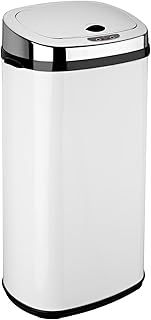
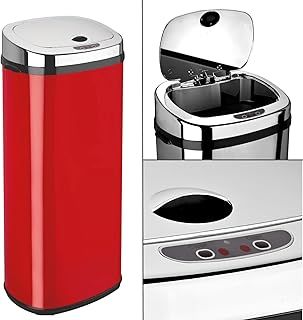
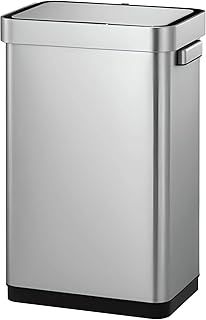
Infrared is convenient right up until it misbehaves. A bin in direct sunlight, next to a shiny surface, or in the path of a pet can open by itself, which is irritating and drains the batteries. Two defences work. Put the bin in a shaded corner away from reflective units, and buy a model with a manual open button so you are never locked out when the sensor sulks or the batteries flatten. The Tower here has a touch override and the Dihl can also be opened by hand, which is worth having when the electronics let you down.
Liners, finish and cleaning
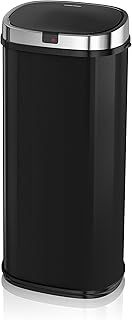
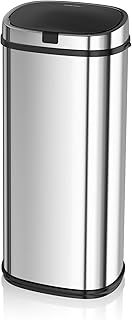
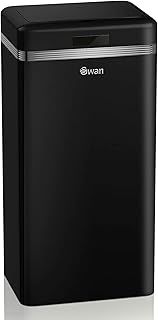
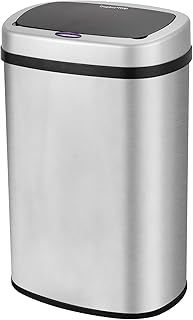
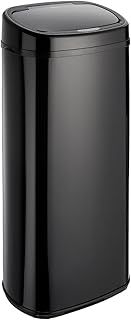
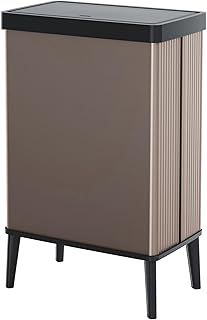
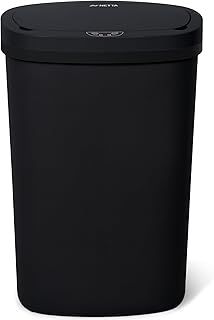
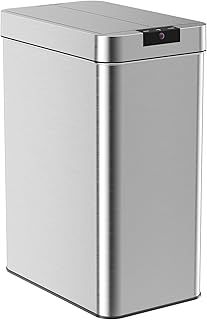
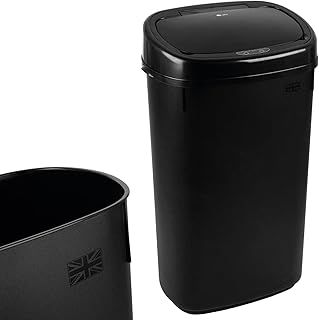
Two small things decide whether you get on with a bin day to day. The first is liner fit. A bag-retainer ring hides the bag edge and stops it slipping, and the SONGMICS 50L on this list includes a ring plus 15 bags to get you going. Check whether your model takes standard supermarket liners or a bespoke size before you buy a year's supply. The second is finish. Brushed stainless looks smart but shows every fingerprint. The fix is easy: wipe along the grain with a microfibre cloth and a little washing-up liquid or white vinegar, then buff dry, and keep abrasive pads well away. A black or coloured bin, like the Tower black and rose gold or the black Morphy Richards, hides marks if that bothers you.
Reading the ratings on this page
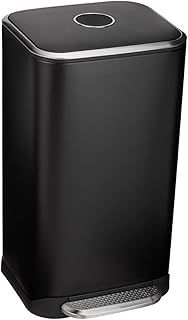
Across this list the scores cluster between 4.0 and 4.6, which is normal for sensor bins where the usual gripes are battery life and the odd bit of sensor lag rather than outright failure. The Amazon Basics 30L leads on review count, with over 7,000 behind it, though the 32L Amazon Basics actually edges it on rating at 4.6. Worth knowing that the 30L is a manual step-on pedal bin, not electric, so it is not a like-for-like match with the sensor models. Among the true sensor bins, the higher review counts on the Tower and Dihl, several thousand each, give you a more reliable read on long-term durability than a strong score on a bin with only a few hundred reviews.