Top 10 Integrated Dishwasher 60cm
Last update: 12-07-2026
Best Large Appliances overall →
Integrated Dishwasher 60cm: 3 things to consider before buying
Measure the cabinet gap before anything else
A full-size integrated dishwasher needs a 60cm wide aperture, roughly 82cm tall, with 55 to 60cm of depth. Leave a bit more at the back for the water and power connections. Check the floor in front too. When the door drops flat, the pulled-out baskets need clear space to slide, so a tight galley or a spot beside an island is where people come unstuck.
Match place settings to how you actually cook
A place setting is everything one person uses at a meal: plate, bowl, glass, cup and cutlery. Twelve settings suit a couple or a small household. Step up to 14 to 16 if you are a family of four cooking every day, because the extra capacity means fewer loads and less part-loaded washing.
For an open-plan kitchen, watch the decibel figure
As a rule of thumb, anything under about 45dB reads as quiet, and the low 40s is hushed enough to leave running while you watch a film. This matters most when the kitchen shares a room with the sofa. Compare the quoted dB across your shortlist rather than trusting the marketing word for it.
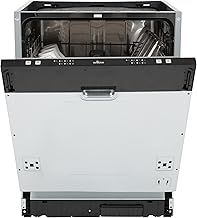
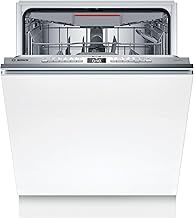
![Hisense HV643D90UK 16 Places Fully Integrated Dishwasher Silver with Foldable bottom plate baskets [Energy Class D]](https://img.smarterfinder.com/product/l/Vbwz62U0vC.jpg)
Frequently Asked Questions
How many place settings do I need for a family of four?
What is a quiet enough noise level for an open-plan kitchen?
What is the difference between fully integrated and semi-integrated?
Will a 60cm integrated dishwasher fit my kitchen?
What does the energy rating mean and how much does running one cost?
Which drying system dries dishes best?
Is the eco programme actually worth using?
Do I need adjustable or foldable baskets?
Your complete guide to Integrated Dishwasher 60cm
Fit comes first: measure twice, buy once
An integrated dishwasher is only the right buy if it slots cleanly into your kitchen run, so start with a tape measure, not a spec sheet. UK kitchens are built around a standard 60cm cabinet. A full-size machine wants roughly 60cm of width, 82cm of height under the worktop and 55 to 60cm of depth. Leave extra room at the back for the water and electrical connections, since the machine rarely sits flush against the wall. Then think about the door. When it lies flat you need clear floor in front so the baskets can slide all the way out, which is easy to forget in a galley kitchen or against an island. If your gap is only 45cm, you want a slimline model, not one of these 60cm machines. Get the aperture wrong and everything else on the spec sheet is academic.
Fully integrated vs semi-integrated
The products on this page are fully integrated. The controls sit on the top edge of the door and vanish behind your cabinet panel once it is shut, which gives you a flush, built-in kitchen look. The trade-off is small but real: you have to open the door to read the display or check the programme. A semi-integrated machine keeps a control strip visible along the top, so you get at-a-glance status, and it often costs a little less. Most people fitting a modern handleless kitchen go fully integrated, and that is what every model here delivers. One thing worth confirming on the product page before you commit is that the machine is genuinely built-in rather than a freestanding unit dressed up in the listing, because the two get muddled in some spec tables.
Capacity: what the place-setting number really means
Capacity is quoted in place settings, and one setting is everything a single person uses at a meal: plate, bowl, glass, cup and cutlery. Pans and serving dishes are not counted, so real-world room is a touch tighter than the headline number. As a rough guide, 12 settings suit a couple or a one-to-two-person home, 13 to 14 covers a typical family, and 16 gives headroom for a busy household or anyone who saves the washing up for one big go. Bigger is not automatically better. A large drum you rarely fill just means longer part-loaded cycles. Size it to how you actually cook, and look for adjustable or foldable baskets if you regularly wash awkward things like tall glasses and large pots.
Noise and drying, the two things you notice daily
Noise is the feature people underrate until the machine is running during a film. As a rule of thumb, under about 45dB reads as quiet and the low 40s is hushed enough for an overnight run, which matters most in open-plan layouts where the kitchen shares space with the sofa. Where the number is published, compare it across your shortlist. Drying is the other daily factor. Auto door-opening or AirDry systems crack the door at the end of the cycle to vent steam and pull in cool air, which dries plastics better and uses less energy than heated closed-door drying. If you wash a lot of plastic tubs and want them dry without reaching for a tea towel, prioritise this.
Energy rating and running cost
Since March 2021 the UK energy label runs A to G, with the old A+++ tiers gone, so a modern A or B is genuinely efficient rather than marketing gloss. The rating is measured on the eco programme, which uses a lower water temperature over a longer run to save electricity, so eco is usually the cheapest cycle day to day. Running cost tracks energy use fairly directly, and a more efficient machine run daily saves a meaningful sum over a year against a thirstier old one. Treat any headline cost figure as illustrative, since it swings with the tariff and how often you run a load. Over a decade the efficient machine tends to earn back its higher sticker price.